MovingNOW | On-demand moving service app
Product & Service Strategy
Market & Competitive Analysis
Strategic Research & Insight Synthesis
UX Prototyping & Usability Testing
Expertise/Skills
Opportunity
Moving services in Brazil are still largely fragmented, opaque, and time-consuming. Users often need to contact multiple providers, negotiate availability, and only discover the final price at the end of the process, creating stress in an already high-friction moment.
This project explores how a digital platform could simplify on-demand moving services by combining instant availability, transparent pricing, and qualified professionals in one experience.
Solution
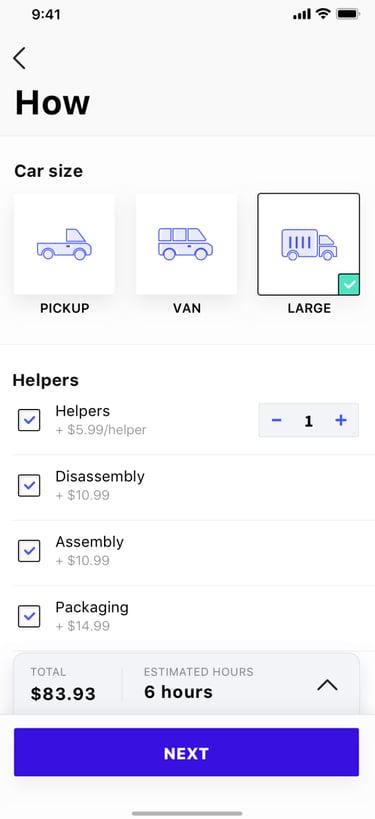
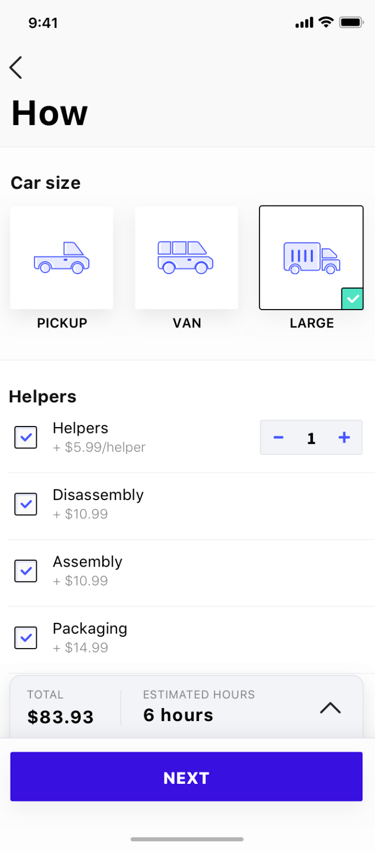
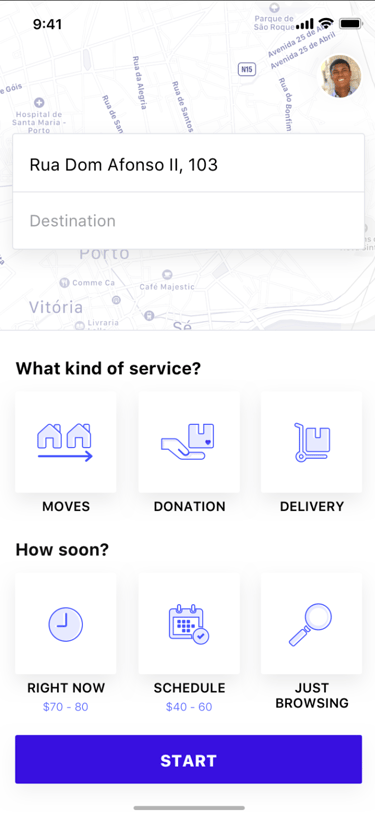
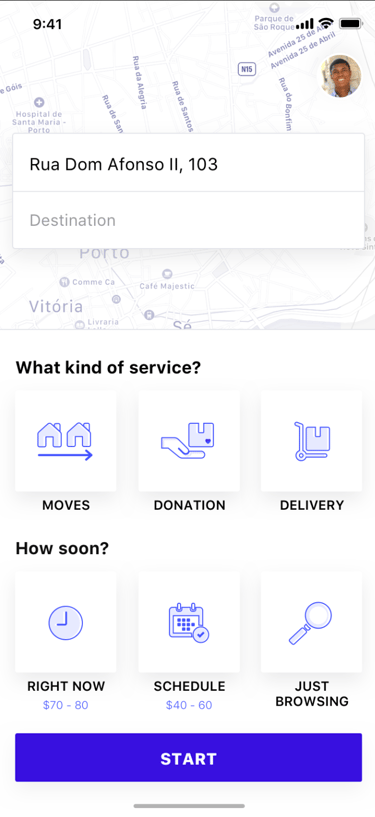
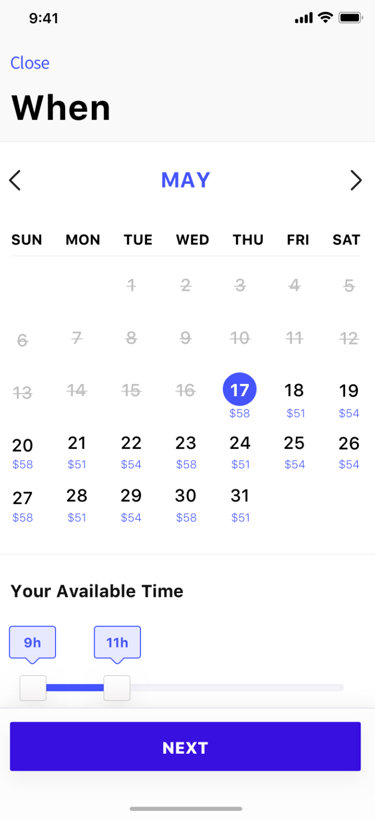
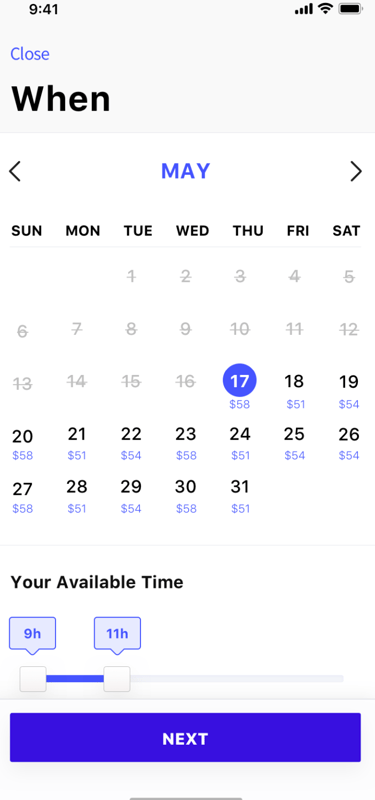
We designed a native mobile application that allows users to book moving services instantly, with a clear final price shown upfront. The platform connects users with vetted professionals, offers flexible scheduling, and supports additional services to better plan each move.
The solution prioritizes reducing uncertainty, saving time, and increasing trust at the earliest decision-making moments.
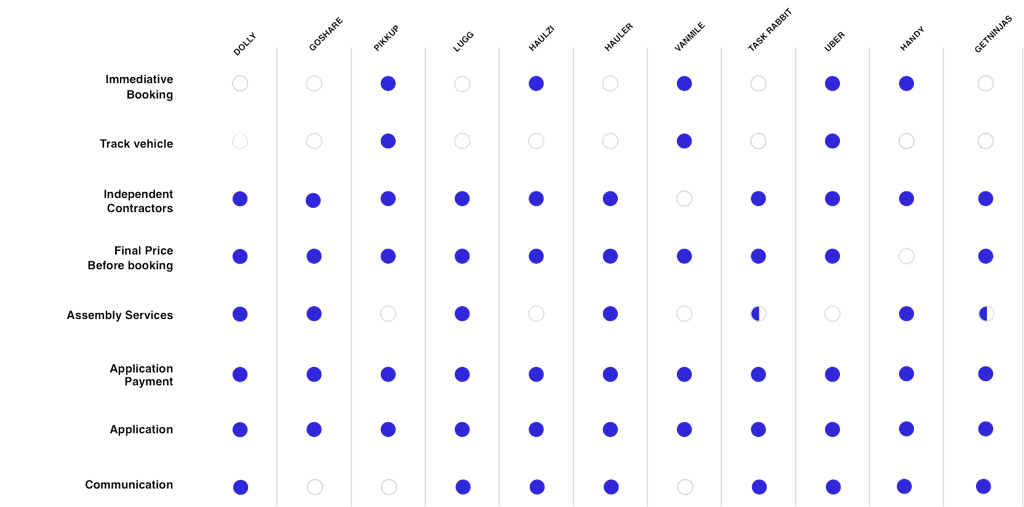
We defined the core value propositions of the MovingNOW service. From these discussions, we identified key service characteristics to be used as comparison criteria in the competitive analysis:
Instant booking
Vehicle tracking
Independent contractors
Final price before booking
Assembly services
In-app payment
Quality of communication across the service
Competitive analysis
User Research - Key Insights
User research combined a quantitative survey (14 responses) and qualitative interviews (8 participants), conducted within the Brazilian context. The research was focused on end users, aiming to understand their needs, decision criteria, and pain points when hiring moving services. Future research with independent contractors is needed to understand provider-side perspectives.

Discovery & Hiring Behavior
Moving services are primarily found through personal referrals, indicating low digital presence and low trust in online solutions.
Most users hire moving services infrequently, usually for a full home move, rather than isolated tasks.
Decision Criteria
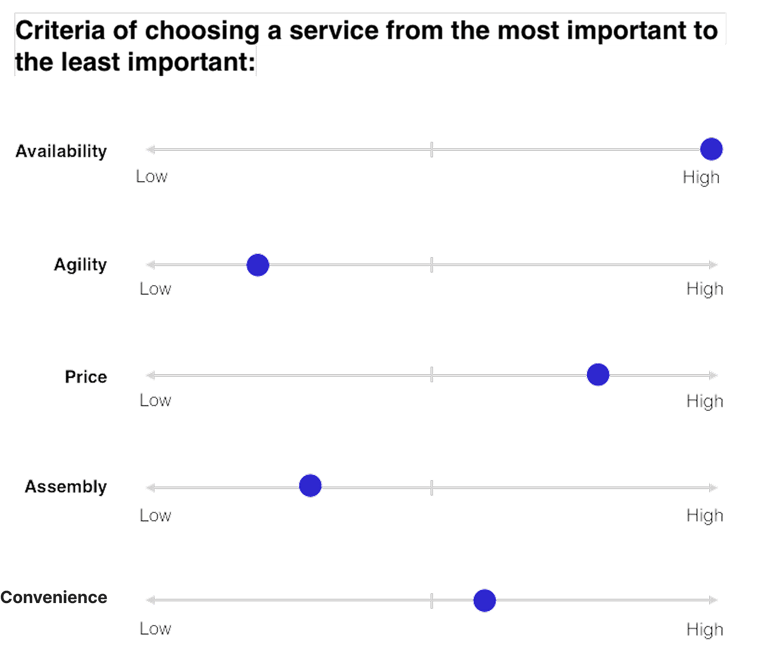
The most important factors when choosing a service are availability, price, and ease of hiring.
Features such as speed and furniture assembly are perceived as secondary, but become critical when missing.
Key Pain Points
Comparing prices is the biggest challenge in the decision process.
Requesting quotes and scheduling are moderately difficult, while communication with providers is relatively easier.
Users reported lack of care with furniture, missing or lost personal items, and insufficient labor during the move.
Limited visibility into driver and provider information increases insecurity and distrust.
Trust & Service Expectations
Users expect clear information about pricing, availability, payment methods, and service scope before booking.
Service evaluations and reviews are essential for building trust and supporting decision-making.
“Removal process of the furniture in the origin and then in the assembly, there was no care”
“Did not fit everything in the vehicle”
“In a moving, some personal objects were lost”

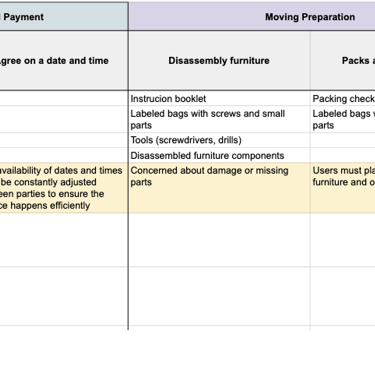
AS-IS process mapping was conducted as a result to document customer challenges and inefficiencies throughout the end-to-end journey.
AS-IS process
Service model visualization
The service was designed as a mobile application to centralize a fragmented moving journey, enable real-time coordination between customers and independent providers, and build trust through transparency at critical decision points.
Beyond the customer interface, the app acts as the operational backbone of the service, supporting booking, execution, payment, and quality management at scale.
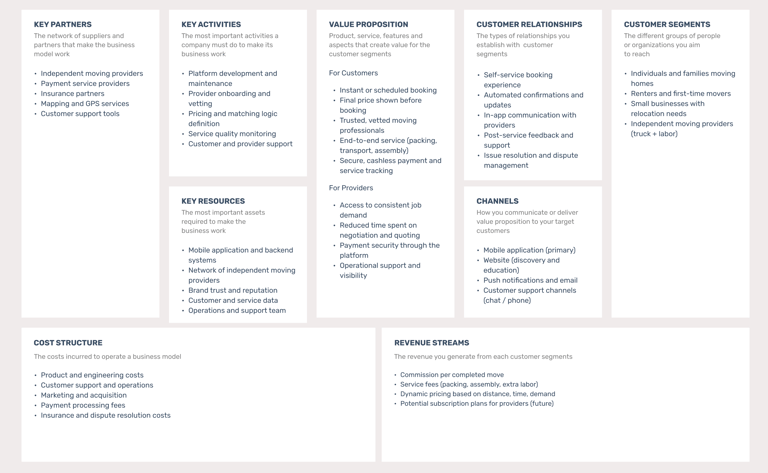
Understanding the business model and constraints with BMC
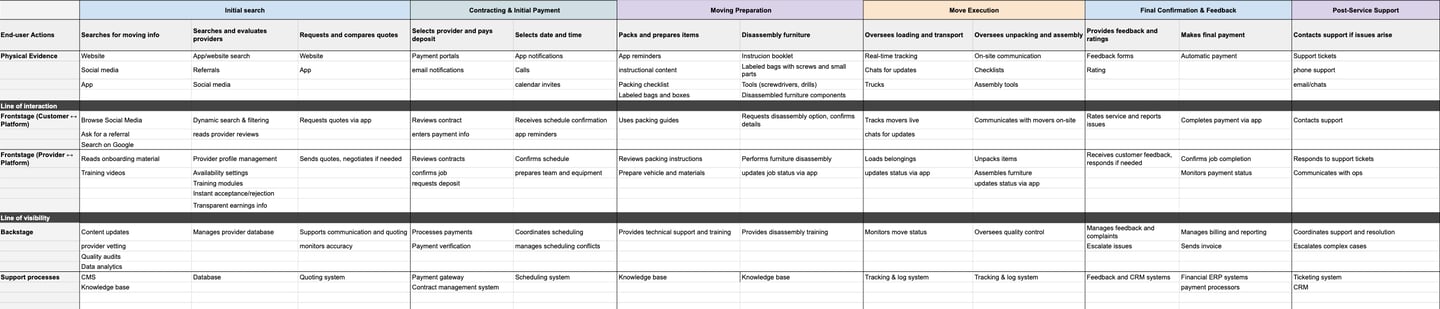
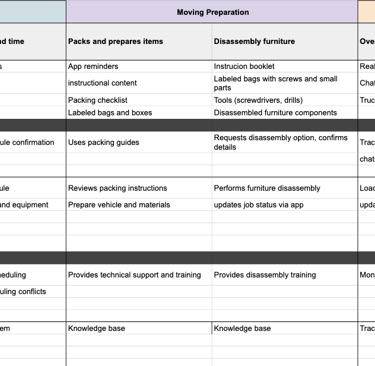
Service visualization using a service blueprinting tool, mapping customer actions alongside the required frontstage and backstage processes.
UX deliverable
I've developed an interactive prototype focused on prioritized service features, which was subsequently tested through usability sessions with representative end users to validate and refine the overall service experience.