Santander Room Booking
Stakeholder alignment
Agile methodology
Shadowing
Interviews with stakeholders & users
UX Prototyping & Usability Testing
Expertise/Skills
Context
Room Booking is a back-office system used by Santander Brazil employees to book and manage meeting rooms across the company’s main buildings. The system supports different access levels and operational responsibilities, ranging from room administration to daily meeting scheduling.
Goals
Simplify and optimize daily room booking and management tasks.
Reduce time spent on repetitive and manual operations.
Improve system performance and reliability.
Enable better control and visibility over room usage through automation and reporting.
Increase user autonomy and confidence when performing tasks.
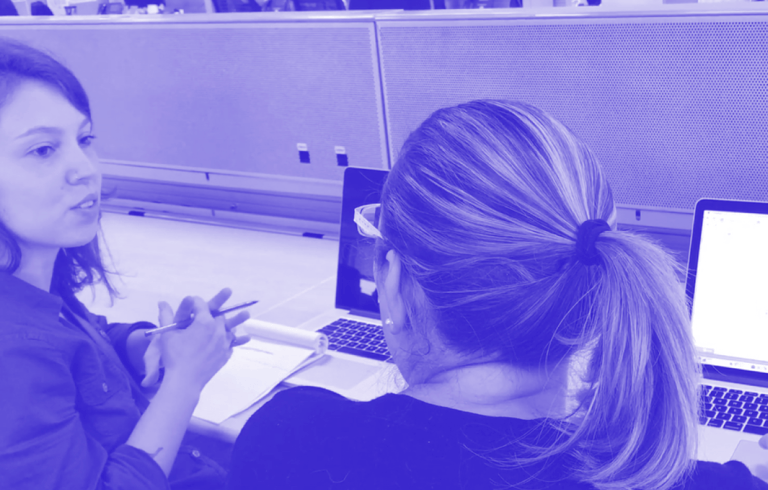
Ten individual interviews and shadowing sessions were conducted with employees and stakeholders responsible for room management and system operation. The research focused on understanding:
Daily tasks performed by different access levels.
Pain points encountered during routine operations.
Business needs related to reporting, control, and governance.
Synthesizing insights from user observations and testimonials, we identified key challenges impacting daily tasks: repetitive reservation workflows, poor transparency in cancellations and no-shows, and inefficient search and editing experiences.
Discovery
Analysis & Synthesis
Insights from discovery phase were synthesized into core needs related to everyday tasks, revealing three main strategic premises:
Reduce bureaucracy: automate repetitive actions and eliminate unnecessary steps that slowed down daily operations.
Qualify content: improve room discovery through smart filters, clearer information hierarchy, and more visual, contextual search results.
Increase transparency and accountability: define clear system rules to handle cancellations and no-shows, preventing rooms from being blocked without use and improving visibility into room occupancy and usage.
Make the process more interactive: give users greater autonomy and confidence through clearer feedback, system status visibility, and predictable outcomes for their actions.
The iterative testing process led to refinements that significantly improved task efficiency, clarity, and system usability. Users validated the redesigned flows as more intuitive and aligned with their daily routines.
The final interface was considered satisfactory by users and stakeholders. The UI Kit was developed by Santander’s Design Team, with collaboration from designers allocated to the bank, including myself.
Different room types were managed across multiple systems.
Learnings
Designing for back-office required a thorough understanding of daily tasks, operational constraints, and interactions among different user roles, achievable only through direct observation and ongoing user feedback.
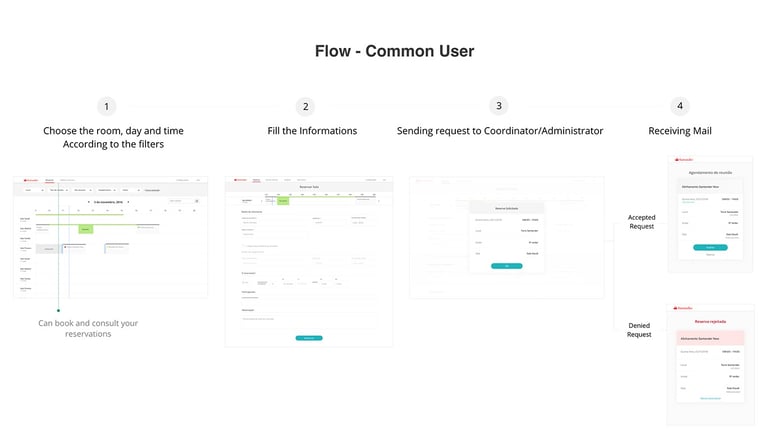
"I spend a lot of time making recurring reservations, it would be good if I could do it on a single reservation request."
JULIANA, SECRETARY (OPERATOR ACCESS)
"I would like to see room occupancy statistics and automate this process to generate periodic reports. "
ALEXANDRE, RESPONSIBLE FOR THE ROOM MANAGEMENT DEPARTMENT (MANAGER ACCESS)
"I usually need to cancel a room booking to change the time or date and fill in all the info again."
LILIANE, OPERATOR OF THE DEPARTMENT OF ROOM BOOKING (OPERATOR ACCESS)
"The current system requires you to navigate through many find a room. It would be nice if I had a more visual search result."
JOÃO ROBERTO, MARKETING ANALYST (COMMON USER ACCESS)
"The current system does not show who gave no-show or canceled A reservation. This creates problems for our team."
SILVIA, EXTERNAL MEETING AREA OPERATOR (OPERATOR ACCESS)
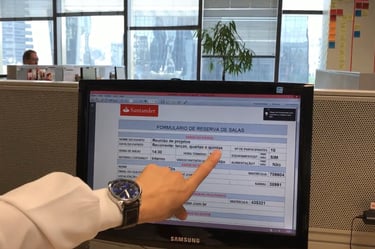
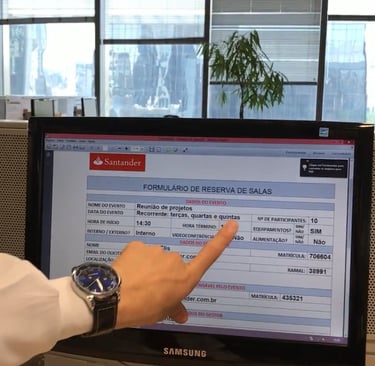
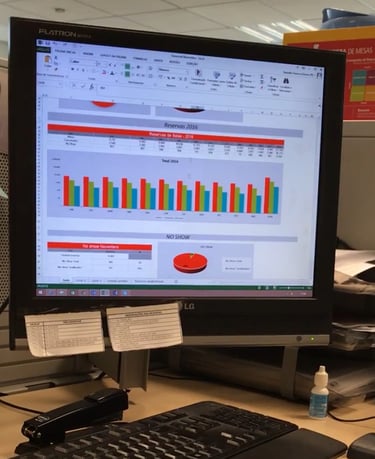
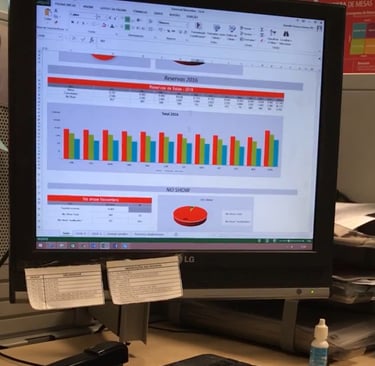
The room booking application presented usability and functional issues, making task completion time-consuming.
Solution & Definition
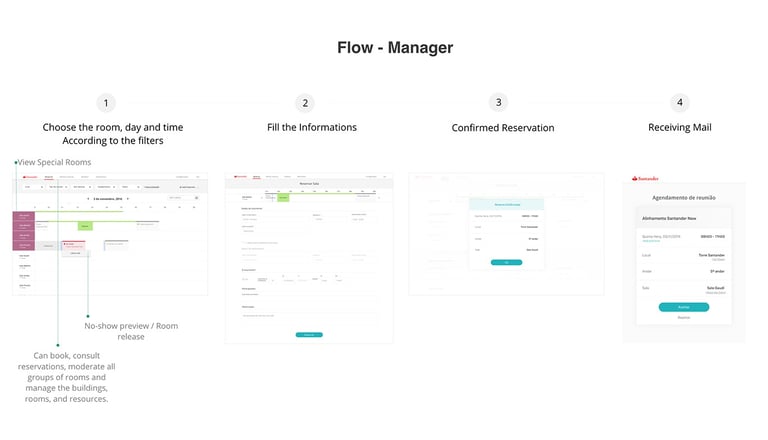
Flows and processes were redesigned according to operational responsibilities and daily tasks, such as:
Managing rooms, equipment, and special events.
Booking, editing, and recurring reservations.
Monitoring room occupancy and no-shows.
Generating usage statistics and reports.
Stakeholders also identified the limitation of desktop-only access as a barrier. This led to the proposal of a lightweight mobile application to allow reservation management outside the office, including reminders and notifications to reduce no-shows and improve punctuality.
Prototyping & Validation
Interactive prototypes were created and tested using task-based usability testing that mirrored real work scenarios. Users were asked to perform sequences of daily tasks, such as managing special rooms, editing recurring reservations, and resolving conflicts in scheduling.
Both qualitative and quantitative feedback were collected, focusing on:
Ease of decision-making.
Clarity of the flow.
Errors, doubts, and user confidence during task execution.
The test sample included representatives from different access levels to ensure consistency across operational needs.
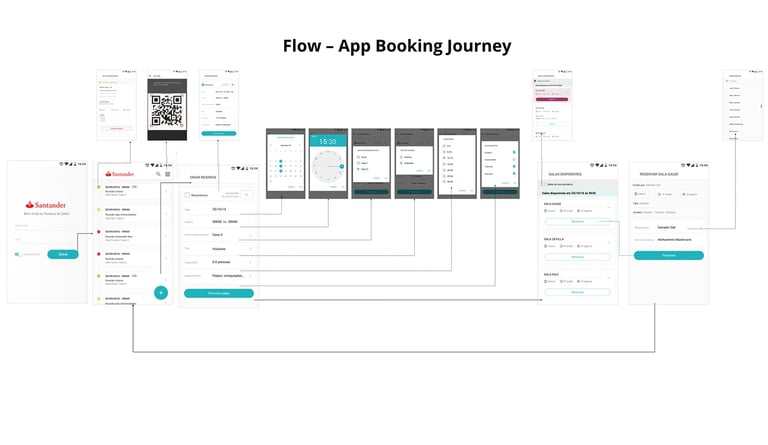
Initial assumptions were regularly refined through cycles of testing and interviews, which helped clarify doubts, validate decisions, and uncover issues not evident in early stages.
The discovery and validation phases guided feature prioritization within the squads. This increased the squad’s confidence in the design process and improved trust and alignment between stakeholders and the team, making the product better.